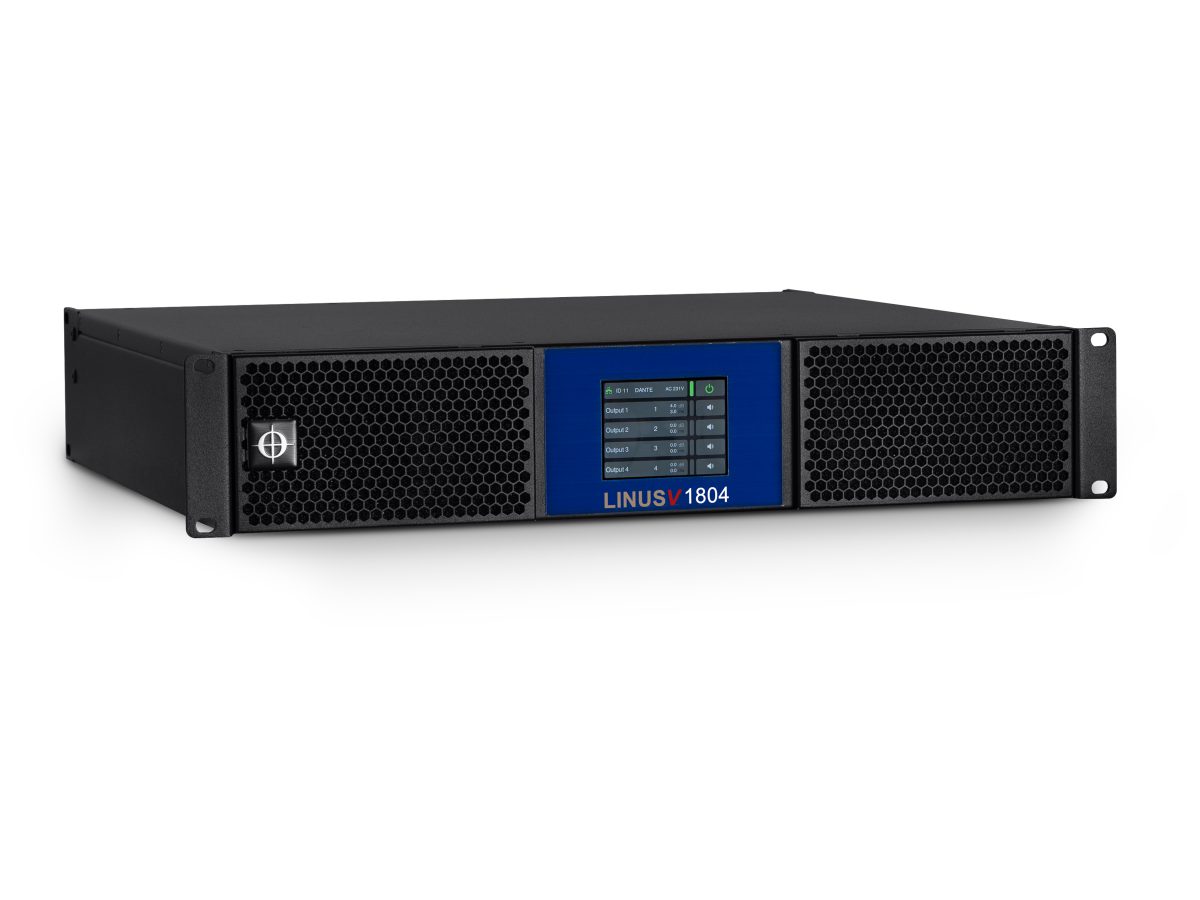
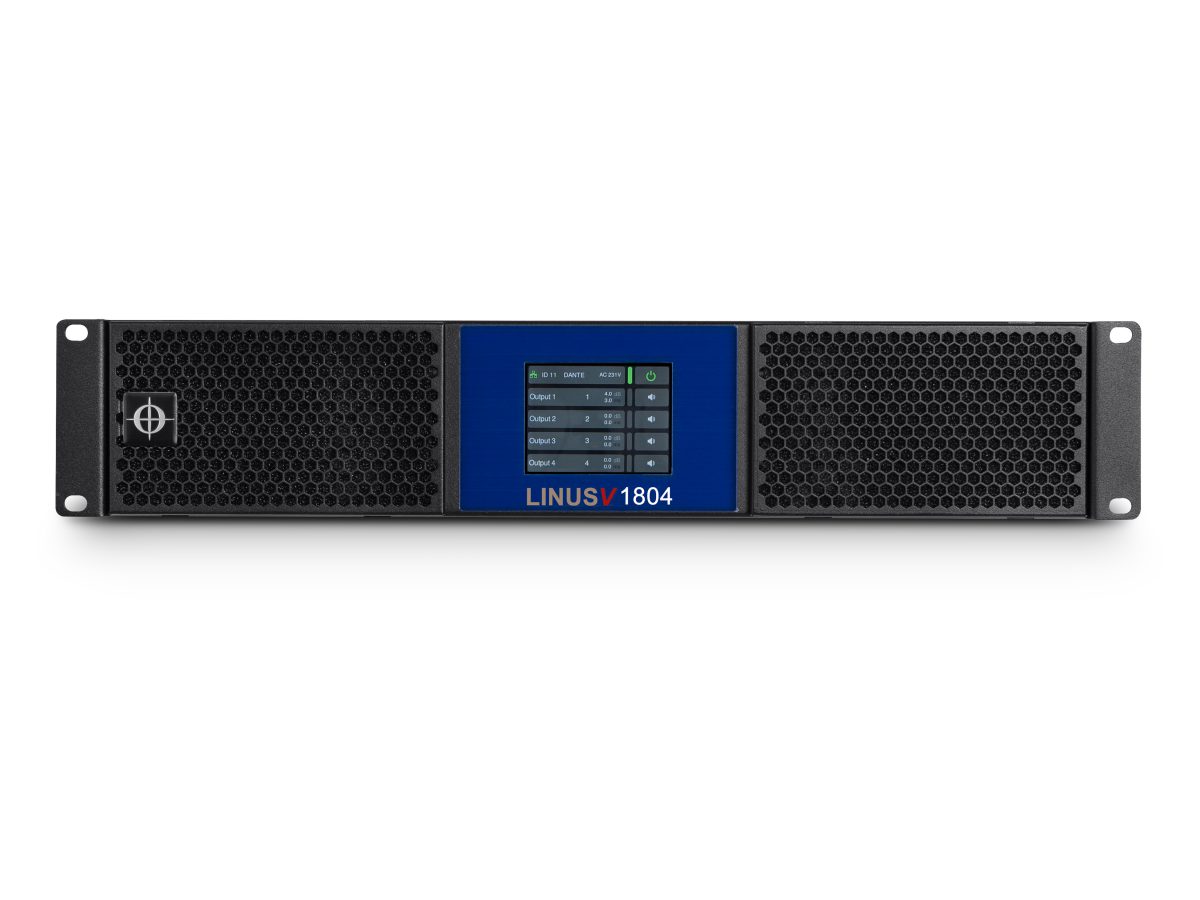
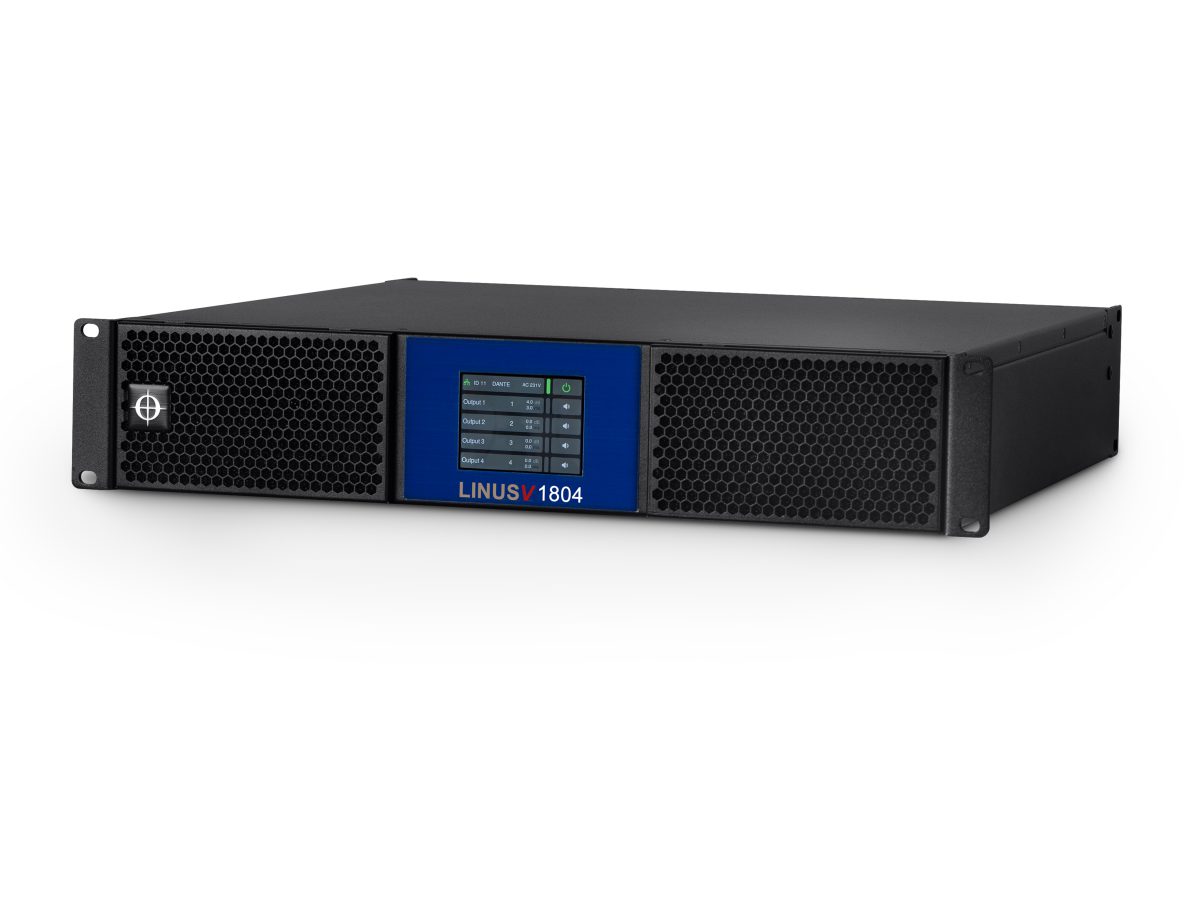
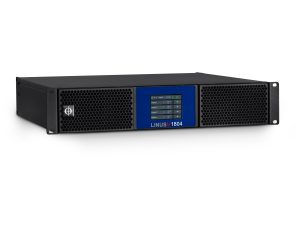
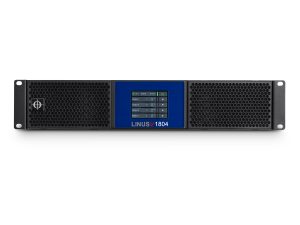
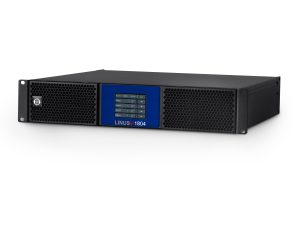
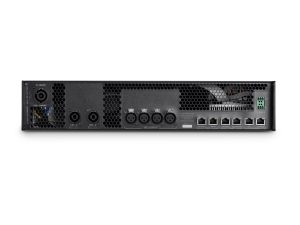
Der LINUS-V1804 ist ein vierkanaliger Leistungsverstärker in Touring-Qualität, der unter Verwendung der neuesten Verstärkertopologie von CODA Audio entwickelt wurde. In einem kompakten 2U-Gehäuse vereint er eine hohe Ausgangsleistung mit sehr geringen Verzerrungen für professionelle Beschallungsanwendungen.
Der V1804 liefert 3000 W pro Kanal bei einer Mindestlast von 4 Ohm und bietet damit ausreichend Leistung für anspruchsvolle tragbare und kleine Touring-Systeme. Dank seiner Ausgangsleistung, Klanggenauigkeit und Systemflexibilität kann er jeden CODA-Lautsprecher bis hin zum APS-Pro ansteuern.
Der Verstärker verfügt über eine neue DSP-Architektur, die zukünftige Firmware-Updates und eine langfristige Systemanpassungsfähigkeit ermöglicht. Zwei hocheffiziente SMPS mit PFC unterstützen den universellen Netzbetrieb mit 100–240 V.
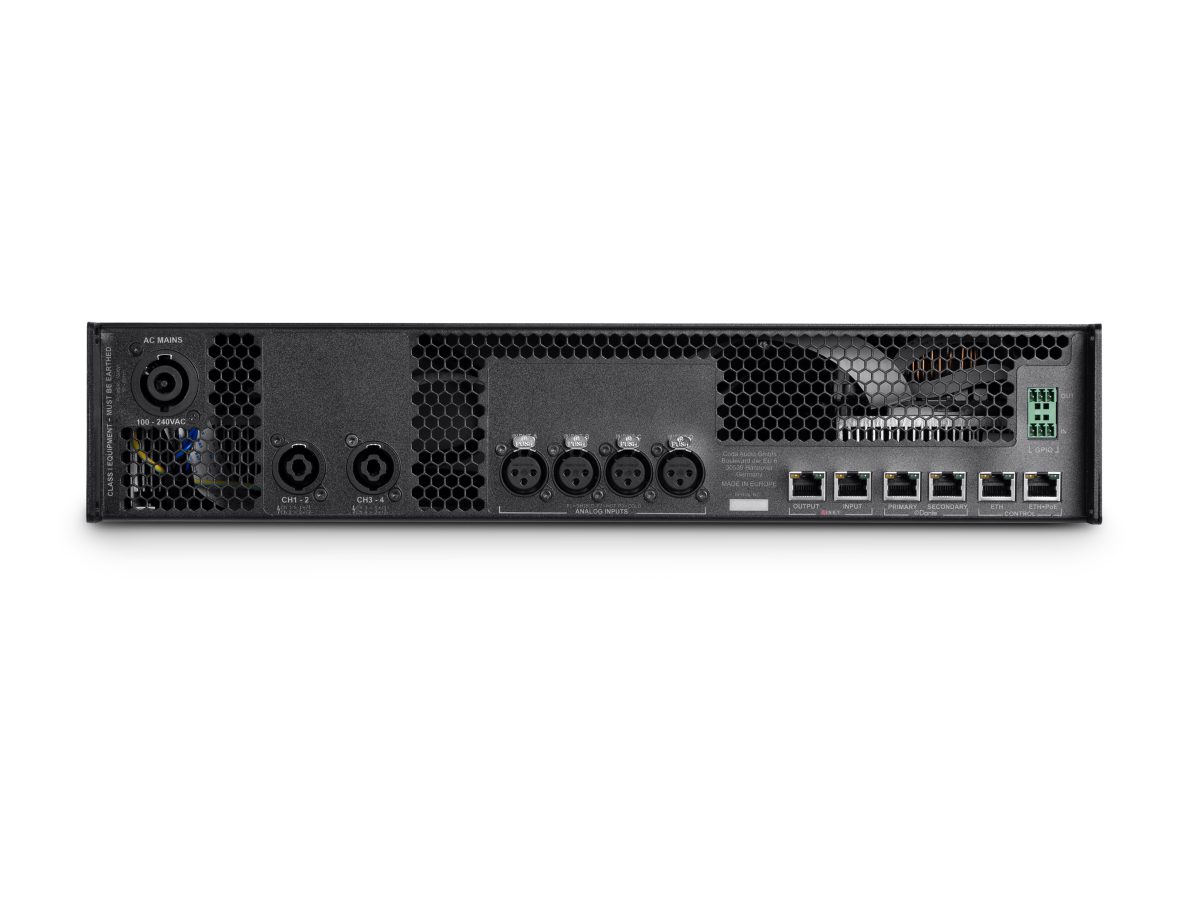
Analoge und LiNET-Eingänge sind Standard, Dante ist beim Modell V1804-D verfügbar.
Die werkseitigen Presets für CODA-Lautsprecher – mit Ausnahme von Sensor Controlled Subwoofern und großformatigen Line-Arrays – sind intern gespeichert und können über den Touchscreen mit einer Auflösung von 320 × 240 Pixeln abgerufen werden.
Die Steuerung ist lokal, über die LINUS Control App für einzelne Verstärker oder über den Netzwerkbetrieb mit der LINUS Control Software für die vollständige Systemverwaltung möglich.
Der LINUS-V1804 wurde für professionelle Touring-Umgebungen entwickelt und verfügt über eine fünfjährige Garantie. Firmware-Updates sorgen dafür, dass der Verstärker mit neuen Voreinstellungen und speziellen Funktionen auf dem neuesten Stand bleibt.
Leistung, die über ihre Größe hinausgeht. Kontrolle, die in Ihre Hosentasche passt.
Minimum 2.70 ms AES/EBU input
Minimum 2.00 ms analog input
Schutzschaltungen
Einschaltstrombegrenzer
Thermischer Limiter
Ausgang DC
SMPS-Überstrom
Ausgang Überlast
User interface
IPS Touchscreen 240×320
Mute / Status / Limit / Signal / Protection / Ethernet / Power on / Mains voltage
Parameter über Bedienelemente an der Vorderseite: Preset / Delay / Mute / Snapshot / Standby
Ethernet coconnectionnnection
2 × 100 Mbps RJ45 Control (1 port accepts PoE 802.3af backup power for DSP)
2 × 1000 Mbps RJ45 Dante™ (Redundant)
AC-Netz
AC-Netzeingangsanschluss
32A powerCON®
AC Netzspannung
100 V – 240 V AC mit PFC
AC Netzspannung (nominal)**
90 V – 264 V AC
Leistungsaufnahme (maximum)**
Amplifier in standby = 16 W Amplifier idle = 40 W Amplifier ¼ power = 3000 W
AC Netzfrequenz
47 – 63 Hz
Eingänge
Eingangsquellen
Analog & LINET & DANTE™ (optional)
Eingangsimpedanz analog
(balanced)
20 kΩ
Maximales Eingangslevel
(analoges Differential)
+21 dBu
Eingangsanschlüsse
4 × XLR3 Analog IN 1 × RJ45 LINET IN (8× CH) 1 × RJ45 LINET LINK (8× CH) 2 × RJ45 DANTE IN (8× CH) (optional)
2x temperaturgesteuerte Lüfter Warmluftaustritt auf der Rückseite
Physikalisch
Abmessungen (BxHxT)
483.5 x 88 x 454.18 mm / 19” x 3.4” x 17.8” (2U)
Abmessungen (inkl. Umverpackung) (BxHxT)
675 x 130 x 560 mm (0.049 m³) / 26.5” x 5.1” x 22”
Nettogewicht
12 kg / 26.46 lbs.
Versandgewicht
14.75 kg / 32.52 lbs.
* Typische Werte – aufgrund von Bauteiltoleranzen kann es zu Abweichungen kommen.
**Spannungsbereich sollte nicht überschritten werden. Die Ausgangsleistung des Verstärkers nimmt unterhalb der Netzspannung ab und ioberhalb der Netzspannung zu.